
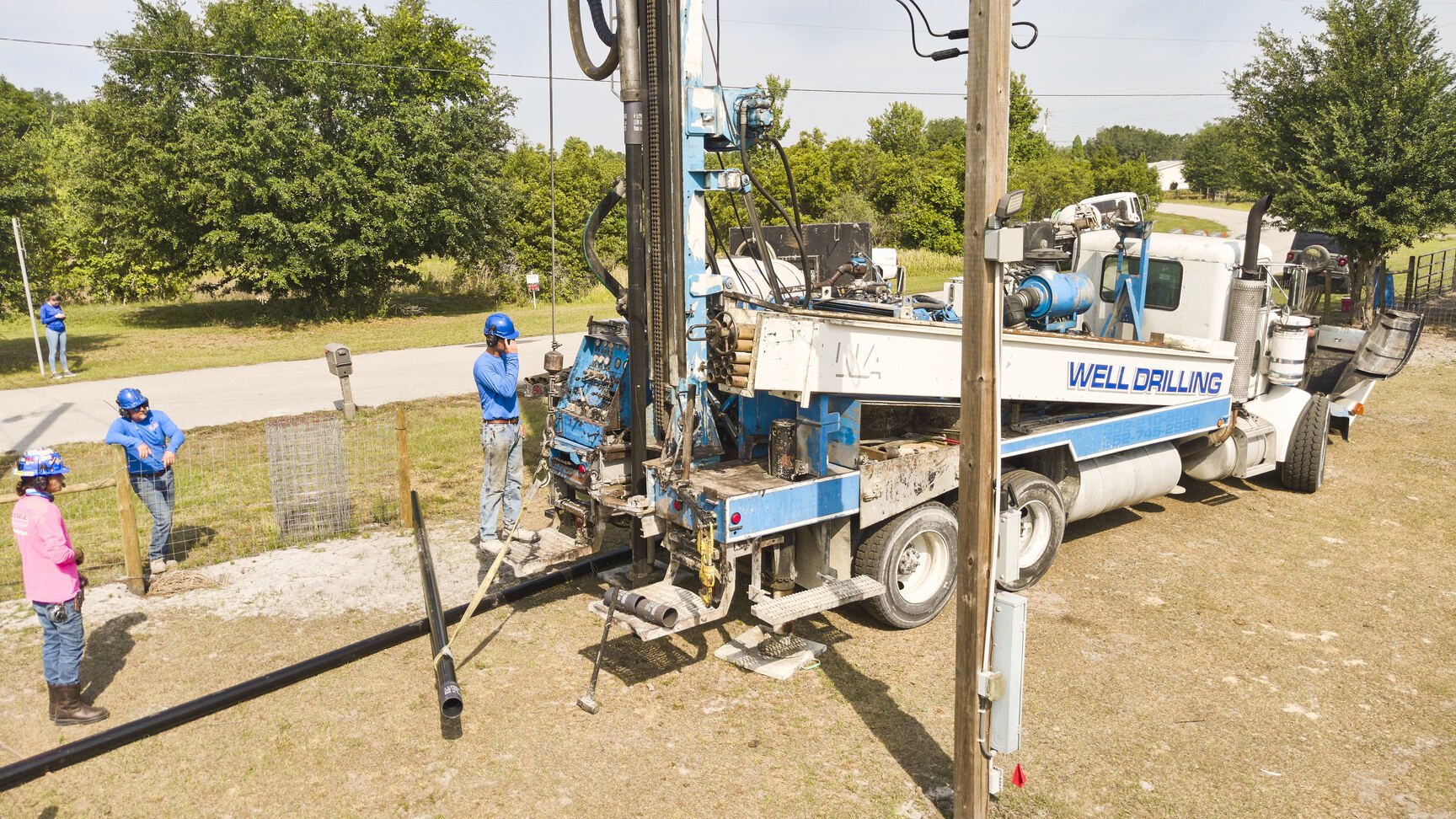
Well Plugging and Abandonment in Polk County and Surrounding Cities
We service all of Polk County, Plant City, Dover, Avon Park, and Wauchula. We also service some parts of Lithia, Valrico, Thonotosassa, Dade City, Zephyrhills, Clermont, Groveland, Kissimmee, Poinciana, Sebring, and Bowling Green.
Polk County communities we serve include Auburndale, Winter Haven, Polk City, Lakeland, Lake Alfred, Kathleen, Highland City, Mulberry, Dundee, Haines City, Davenport, Lake Wales, Eagle Lake, Bartow, Frostproof, Babson Park, and Fort Meade.
Land has a history as old as time, and most properties have had multiple owners through the years, each making changes to the land to suit their needs. Old farms and establishments may have been constructed with one or more water wells, some not evident to the current homeowner.
The biggest problem is that the locations of old wells can be forgotten, and their casings may deteriorate or rust. New landowners build over these out-of-service well sites and unknowingly create hazardous land use. Old wells located by wastes associated with stables, chicken houses, and dumps may flow straight down to the aquifer.
Out-of-service wells of any type pose a potential safety hazard or threat to groundwater quality if not correctly maintained or abandoned. Liability issues are also a consideration if an old well on private property is a proven contaminant conduit that reaches neighboring groundwater. For example, contaminants may reach the groundwater zone of the old well where they travel to other areas of the aquifer. If the contamination connects with another water well, it can impact other aquifers and threaten operating wells and water supply sources.
Abandoned water wells are rarely a contamination risk for deep aquifers. Still, their wide diameter is a safety hazard for people and animals. Landowners should locate any old or out-of-service wells. There are clues to the location of these wells, including:
Pipes sticking out of the ground
Small, abandoned buildings that may have served as well houses
Depressions in the ground
Old concrete vaults or pits
Out-of-use windmills (wind pumps)
Landowners can gather other clues from the following:
Old maps, plans, and property title documents
Information from neighbors
Additions to an old home, since wells were often constructed in basements or under porches to protect the water pumps from freezing temperatures and ease winter access.)
Water utility history: What was the home’s water source before utility water was available?
A water well with no current or potential future use should be sealed from the bottom up. Fussell Well Drilling has the right equipment to do this. Any pumps, pipes, related equipment, or blockage should be removed from the well to be filled in and sealed correctly.


Our Reviews
FAQs – Well Plugging and Abandonment in Polk County, FL
Well plugging is required when a well is no longer in use, damaged beyond repair, or poses a contamination risk. Polk County, FL, regulations mandate proper abandonment to protect groundwater and prevent safety hazards on residential or agricultural properties.
Proper well abandonment protects groundwater from surface contamination and prevents open wells from becoming safety risks. Sealing the well correctly also eliminates future liability and keeps the property compliant with local environmental regulations in Polk County, FL.
Well plugging involves removing internal components and filling the well casing with approved sealing materials. The process blocks vertical water movement and prevents contaminants from entering the aquifer, restoring environmental protection to the site.
Yes, Polk County, FL, requires permits and documentation before plugging a well. Following proper procedures supports environmental safety and provides official records showing the well was abandoned according to state guidelines.
An unused well can allow surface pollutants, fertilizers, or debris to reach underground water sources. Professional plugging seals the pathway, reducing contamination risks and protecting nearby wells and groundwater supplies.
Improperly sealed wells can collapse, attract debris, or create direct channels for contamination. Over time, that risk increases for both private water systems and surrounding properties, especially in Polk County, FL's agricultural areas.
Most well plugging projects are completed within a day, depending on well depth and site conditions. A structured approach allows for safe removal of components and proper sealing without prolonged disruption.
Plugging an unused well is often more affordable than maintaining a system that no longer serves a purpose. Proper abandonment prevents future repairs, liability concerns, and environmental complications.
Once properly plugged, reopening a well is typically not practical. Drilling a new well is usually required if water access is needed again, since the plugging material permanently seals the original borehole.
Well plugging should be handled by licensed professionals familiar with Polk County, FL, regulations. Proper equipment, approved materials, and documented procedures are essential for reliable environmental protection and compliance.