
How Long Does a Well Pump Usually Last? What Shortens Or Extends It
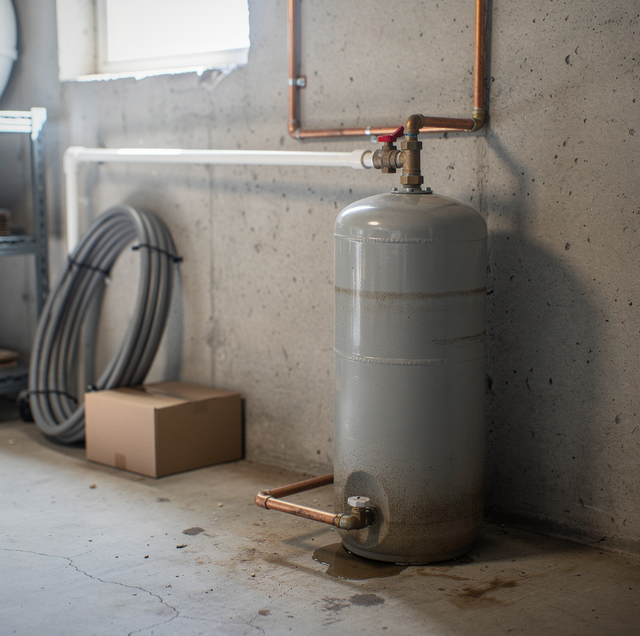
Quick Answer: A submersible well pump typically lasts 8 to 15 years, and a surface-mounted jet pump often falls within a similar range, though actual service life varies widely. The biggest factors are how often the motor starts and stops, how much sand or mineral grit the water carries past the moving parts, whether the pump is sized to match the well's yield, and whether the pressure tank beside it is holding its air charge. A pump that starts less often, pumps cleaner water, and never runs against a failing tank will often outlast the average by years.
A well pump doesn't fail on a calendar schedule. Two identical pumps installed in wells thirty feet apart the same week can behave completely differently ten years later: one still humming along on its original motor, the other already swapped out twice. The difference almost never comes down to luck. It comes down to how often the motor starts, what the water is carrying past its impellers, and whether the pressure tank sitting beside it is doing its share of the work.
What Actually Determines How Long A Pump Lasts
A submersible pump is a sealed motor and impeller stack that lives underwater at the bottom of a drop pipe, sometimes hundreds of feet down. Everything that shortens its life traces back to one of three things: how much electrical and mechanical stress the motor absorbs each time it starts, how much abrasive material passes across its internal parts while it runs, and how well the rest of the system, mainly the pressure tank and the pump's own sizing, protects it from working harder than it should. Age alone tells you very little. A ten-year-old pump that starts twice a day in clean water can be in better shape than a three-year-old pump that starts forty times a day in gritty water.
The Motor Is The Real Clock Running Underneath Everything
Inside the pump housing, a motor spins a stack of impellers that fling water upward through the drop pipe. That motor is built to run for long stretches and rest between cycles, not to start constantly. Every time it kicks on, it draws a jolt of current, sometimes several times higher than its normal running draw, before settling into steady operation. That inrush heats the copper windings for a moment and puts a small mechanical shock through the shaft and thrust bearing that carries the weight of the water column above it. One start does nothing. Tens of thousands of them, spread across years of daily use, wear the bearing surfaces and slowly cook the insulation on the windings until it can no longer withstand normal heat. A motor that fails with age usually fails because its windings finally break down, not because a single part physically wears out.
Frequent Starting Ages A Pump Faster Than Anything Else
The single biggest lever on pump life is how often it starts each day. A pump that cycles on and off every few seconds, a pattern called short-cycling, can rack up in a single week the number of starts a healthy system would see in a month. Most of the time, short-cycling traces back to the pressure tank rather than the pump itself: when the tank's air cushion bleeds away, or its internal bladder ruptures, the tank can no longer hold a reserve of pressurized water, so the pump has to restart almost as soon as a faucet opens even slightly. The pump ends up absorbing the wear caused by a $50 part failing elsewhere in the system. A tank in good shape, holding its air charge and cutting the pump on maybe a dozen times a day instead of hundreds, is one of the cheapest ways to protect an expensive motor.
Sediment And Mineral Grit Wear Down Moving Parts
Water pulled from sand, gravel, or fractured rock almost always carries some fine particulate, and hard or mineral-heavy water leaves scale on anything it touches. Neither is a problem in small amounts, but a pump runs that water across its impellers and seals for years on end, and abrasive grit slowly sandpapers those surfaces smooth, then rough, then pitted. As impeller edges wear down, they move less water per rotation, so the motor has to spin longer to reach the same pressure, which means longer run times and more heat on every cycle. Mineral scale does the opposite kind of damage: it builds up on seals and moving surfaces, throwing components out of balance and causing the motor to strain against friction it wasn't designed to handle. A pump drawing from a sandy or mineral-rich source tends to sit on the shorter end of any lifespan range, while one pulling clean water from stable rock can run well past the average.
Submersible Pumps Versus Jet Pumps: Different Wear, Different Failure Points
A submersible pump sits below the water line, so it stays at a steady, cool temperature and is largely shielded from vibration and weather. Its enemies are what's dissolved or suspended in the water around it and how often it starts. The motor also depends on a steady flow of water passing across its outer shell to carry heat away, which is why a well that has dropped low enough to expose the pump, even briefly during heavy use, can let the motor run hotter than it was built for.
A jet pump sits above ground in a pump house, garage, or utility closet and draws water up by suction rather than pushing it up from below. It faces a different set of stresses: temperature swings from its surroundings, vibration transmitted through its mounting, and a suction line that must maintain a perfect seal or the pump loses its prime. Jet pumps are also easier to inspect and service without pulling anything out of the ground, which sometimes lets small problems be caught and fixed before they lead to a full motor failure. Neither style has an inherent advantage in raw lifespan; the ranges for each overlap heavily, and which one runs longer usually comes down to water quality and cycling more than to the type itself.
A Pump Sized Wrong For Its Well Wears Out On Both Ends
A pump has to match the well it sits in, and getting that wrong shortens life in two opposite directions. A motor sized too small for the household's demand runs close to its thermal limit on every cycle, straining to reach the pressure the system calls for and generating more heat than a properly sized unit would. A motor sized too large for a low-yield well can outpace the pressure tank's ability to buffer its output, causing it to satisfy demand and shut off again within seconds, adding unnecessary starts even when the tank itself is healthy. The well's actual yield, how many gallons per minute it can sustainably deliver, has to line up with both the pump's output and the tank's capacity, or one end of that chain compensates by working overtime.
Sudden Failure Versus Slow Wear
Not every pump dies gradually. A nearby lightning strike or a power surge traveling down the utility line can burn out a motor's windings or control components in an instant, regardless of how new or well-cared-for the pump is. The tell is timing: a pump that worked fine and then quit right after a storm points to a surge rather than ordinary wear. Aside from that kind of event, most pump failures follow the slower pattern above: heat and cycling wearing the motor, grit wearing the impellers, and a struggling tank forcing more starts than the motor was built to handle.
Signs A Pump Is Nearing The End Rather Than Having An Off Day
A pump on its way out rarely quits without warning signs first. Pressure that fades gradually over weeks, even after ruling out a clogged filter or a waterlogged tank, points to impellers that have worn down and can no longer generate the lift they once did. Water that turns sandy or gritty, especially if it keeps getting worse, suggests the pump is either pulling from a sandier zone or its own wearing parts are shedding material into the flow. A motor that runs constantly without ever reaching cutoff pressure is trying to compensate for a leak, a dropped water level, or its own lost efficiency, and it is heading toward failure the longer it stays in that state. A rising electric bill with no other explanation is a quieter clue, since a pump working harder than it should draws more power long before it fully quits.
What Actually Extends A Pump's Working Life
A few habits push a pump toward the long end of its range instead of the short end. Keeping the pressure tank's air charge correct, checked with a simple gauge at the air valve on top, keeps daily starts down near what the motor was designed for. Addressing a dropping water level or a well that's been pumping sand rather than living with it protects the motor from both heat and abrasion. Matching any pump replacement to the well's tested yield rather than guessing at horsepower keeps both ends of the sizing problem in check. None of that guarantees a specific number of years, since water conditions and household demand vary too much for a guarantee to mean anything, but a system where the tank, the sizing, and the water level are all in good order consistently runs longer than one where any of those is neglected.
Frequently Asked Questions
Not really. Manufacturer parts warranties on residential well pumps commonly run one to three years, and that number reflects coverage against manufacturing defects, not a prediction of service life. A pump can carry a short warranty and still run for over a decade, or fail unexpectedly just after coverage ends for reasons unrelated to the warranty period. Some installers offer an extended labor warranty separate from the manufacturer's parts coverage, which is worth asking about since labor to pull and replace a submersible pump is often the higher cost.
For a typical residential-size unit, the labor to pull the pump, disassemble it, replace worn seals or bearings, and reseat it in the well often costs nearly as much as a new pump, so full replacement is the common path. Larger agricultural or commercial motors are sometimes rewound rather than replaced, since their windings and housings are built to be serviced, but that's less common on a household setup.
Yes, in a less obvious way than daily use does. Seals and check valves that sit dry for a long stretch, such as in a seasonal property, can lose their seat or stiffen, and a motor that hasn't run in months should be started under light load and checked for a steady draw before being put back into full daily service rather than switched straight back to normal use.
Yes. An undersized motor works near its thermal ceiling on nearly every cycle, since it has to run longer and harder to reach the same pressure a correctly sized unit would reach with less strain. An oversized motor for a low-yield well can satisfy demand too quickly and shut off again within seconds, adding extra starts even when every other part of the system is healthy. Matching horsepower to the well's tested output protects the motor from both directions.
Treatment equipment installed inside the house, near the pressure tank, does nothing to protect the pump itself, since the pump sits ahead of that equipment in the flow path and has already pushed the raw water through its own moving parts before treatment ever touches it. A screen or sediment separator installed at the wellhead is what actually keeps abrasive material away from the motor and impellers.
Yes, and it's easy to overlook. A well with a corroded or partially collapsed screen lets in more sediment regardless of how new the pump is, so a fresh pump dropped into a well with a failing screen can wear out on the same accelerated schedule as the pump it replaced. Evaluating the well itself, not just the pump, matters when a replacement keeps failing earlier than expected.
Schedule a pump and tank checkup — a technician can gauge how much life is left in your current pump and catch a failing tank before it shortens the life of a new one. Fussell Well Drilling serves Polk County and Central Florida. Call (863) 984-3144.
