
Water Softener Vs. Whole-Home Filtration: Which Do You Need?
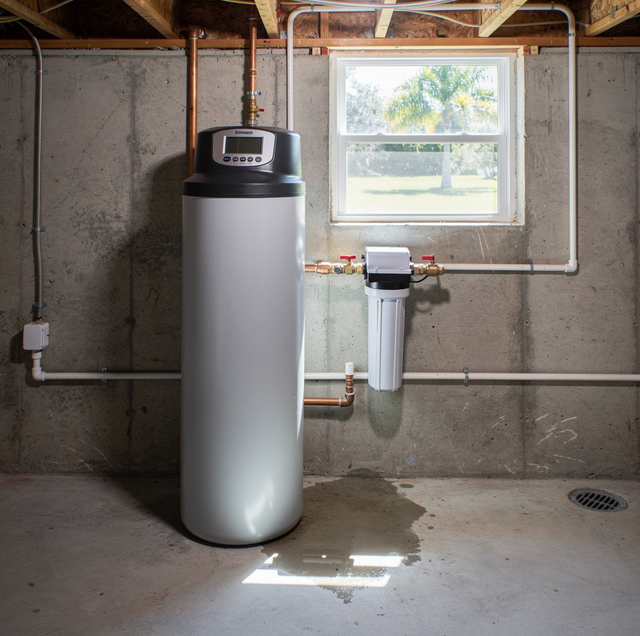
Quick Answer: A water softener uses ion exchange resin to swap calcium and magnesium (the minerals that cause hardness and scale) for sodium or potassium, and it does essentially nothing for sediment, chlorine, bacteria, or dissolved gases. A whole-home filtration system uses media like sediment cartridges, activated carbon, or an oxidizing stage to strip out particulates, chemicals, and odor-causing compounds, and it does essentially nothing for hardness, since dissolved mineral ions pass straight through most filter media. A private well is more likely than a municipal supply to carry hardness and contaminants simultaneously, which is why many well households end up needing a softener and a filtration stage installed together rather than choosing one over the other.
Soap that won't lather, a faint metallic taste, spots on glassware that won't wipe off, and a smell that shows up the moment you run the hot tap: none of that tells you which box to check on a treatment quote. A water softener and a whole-home filtration system both get installed at the point where water enters the house, both come with a tank and a control valve, and both promise better water. Past that surface resemblance, they solve almost entirely different problems, and buying one to fix a job only the other one does is a common way to spend money on equipment that never touches the actual complaint.
What A Water Softener Actually Removes
A water softener treats one specific problem: dissolved calcium and magnesium, the minerals responsible for hardness. Inside the tank, water passes through a bed of resin beads coated in sodium or potassium ions. As hard water moves through, the resin grabs the calcium and magnesium and releases sodium or potassium in exchange, so the water leaving the tank still carries dissolved minerals, just not the ones that build scale. That swap is the entire function. A softener does not filter out sediment, does not remove chlorine or chemical taste, does not disinfect for bacteria, and only handles small amounts of dissolved iron before the resin bed fouls and loses capacity. Ask a softener to fix a rotten-egg smell or cloudy water, and it will keep running its regeneration cycle on schedule while the actual complaint never improves.
What Whole-Home Filtration Actually Removes
Whole-home filtration is a category, not one single technology, and what it removes depends entirely on which media sits inside the housing. A sediment filter or spin-down prefilter strips out sand, silt, and rust particles by physically trapping them. Activated carbon adsorbs chlorine, some organic chemicals, and many taste-and-odor compounds. An oxidizing or aeration stage converts dissolved iron and hydrogen sulfide gas into a solid or gas form that a downstream filter can then trap or vent off, which is usually how a sulfur smell gets addressed at the whole-house level. None of those stages touch hardness. Calcium and magnesium remain dissolved in water at molecular sizes that pass through sediment screens and carbon media without being captured, so a household running only a filtration system can still see scale on fixtures and appliances, exactly as before installation.
How Private Well Water Specifically Factors Into The Choice
Municipal water arrives already treated to a fairly consistent chemical profile, so a city household choosing between these systems is usually solving one problem at a time: soften for hardness, or filter for chlorine taste, rarely both out of necessity. A private well is a different situation. Water drawn from a limestone aquifer commonly carries hardness minerals, iron, and sulfur-smelling gas together, since all three trace back to the same rock and groundwater chemistry rather than to separate causes. A well can also shift over a season: a dry stretch that lowers the water table can concentrate minerals in the water drawn from a given depth, while a wet stretch can push more sediment through after the aquifer recharges. That variability is exactly why a water test, not a guess based on symptoms, should drive the equipment decision. A lab or field test that measures hardness in grains per gallon alongside iron, sulfide, and turbidity tells you which category of problem you're actually dealing with, and testing again every so often catches a shift before it turns into scale buildup or a smell that wasn't there last year.
When You Need Both Instead Of Either/Or
Because a well can deliver hardness and contaminants from the same water at the same time, needing both systems is common rather than an edge case. A household with hard water and iron staining, for example, usually needs an oxidizing filtration stage to handle the iron and a softener downstream to handle the hardness, because asking the softener to absorb heavy iron on its own fouls the resin bed and shortens its working life. The order matters here: filtration for sediment and iron typically goes first in the treatment train, ahead of the softener, so the resin bed isn't taking on abuse it wasn't built to handle. A household with truly soft water but a chlorine taste or sediment problem may only need filtration and can skip a softener entirely. The way to tell which situation you're in is the same test mentioned above, read against what each technology is actually built to do, not against which system a neighbor happens to have.
Maintenance Requirements For Each System
A softener's maintenance centers on the brine tank and the resin bed. Salt (or potassium chloride) needs refilling on a schedule that depends on household water use and hardness, and the tank needs an occasional check for a salt bridge or sludge layer that can form at the bottom and prevent the brine from mixing properly. The resin bed itself has a working life measured in years rather than months, and how long it lasts depends heavily on whether iron-heavy water was allowed to pass through it unfiltered; a bed fouled by iron loses exchange capacity well before a clean-water bed would. Filtration maintenance runs on a different clock. Sediment cartridges and carbon media are consumables and need replacement on a schedule tied to the particulate or chemical load the water carries, which, on a well with heavy sediment, can mean far more frequent swaps than a municipal-water household would ever need. An oxidizing or aeration stage typically runs a periodic backwash cycle to flush out the material it's converted, and any UV disinfection stage added to the same treatment train needs its bulb replaced on a separate schedule, regardless of how the rest of the system is holding up.
Water Softener Vs. Whole-Home Filtration At A Glance
| Factor | Water Softener | Whole-Home Filtration |
|---|---|---|
| What it targets | Dissolved hardness minerals (calcium, magnesium) | Sediment, chlorine/chemical taste, iron, sulfur odor, depending on media |
| How it works | Ion exchange resin swaps hardness ions for sodium or potassium | Physical trapping, carbon adsorption, or oxidation, depending on stage |
| Effect on hardness | Removes it | No effect; minerals pass through |
| Effect on sediment/odor/chemicals | No effect | Removes or reduces it, depending on media installed |
| Best fit on a well | Hardness/scale on fixtures, appliances, and water heaters | Sediment, iron staining, sulfur smell, chlorine taste |
| Maintenance | Salt refills, resin bed life tied to iron exposure | Cartridge/media replacement, oxidizer backwash, UV bulb if present |
| Works alone on a typical well | Only if hardness is the sole issue | Only if hardness isn't present or already low |
Deciding Which Setup Actually Fits Your Well
Start with what the water is doing, not with which system sounds more useful. Scale buildup inside a kettle, white crust on faucet aerators, and soap that won't rinse clean point toward hardness and a softener. A smell that shows up specifically on the hot side, orange staining in sinks and toilets, or cloudy water after a heavy rain point toward filtration, and possibly more than one stage of it. A household seeing both sets of symptoms at once is very likely dealing with a well delivering both problems, and installing only one system leaves the other complaint exactly where it started. Because private well water carries so much variability from one property to the next, even between two wells drawing from the same aquifer, a water test result matters more than what worked for a neighbor's well or what a previous homeowner installed. Whatever the test shows, the smaller move is the safer one: add a stage for the specific contaminant a test confirms rather than installing a broad system sized to handle problems that may not exist in your water at all.
Frequently Asked Questions
A softener can handle small amounts of dissolved ferrous iron, roughly a few parts per million, before the resin bed starts fouling and losing its exchange capacity early. Heavier iron, iron that has already oxidized into a reddish particulate form, or hydrogen sulfide gas causing a sulfur smell all need a dedicated oxidizing or aeration stage installed ahead of the softener rather than asking the softener to absorb them directly.
Softened water entering a reverse osmosis unit generally helps it, since RO membranes scale up faster with hard water and last longer when the water reaching them has already had its calcium and magnesium exchanged out. The trade-off is sodium content: someone closely managing sodium intake may prefer a potassium chloride softener or a dedicated non-softened cold tap left unsoftened for drinking.
An annual retest is a reasonable baseline, but retest sooner after any noticeable change in taste, smell, or clarity, and after a flood or heavy rain event, since surface water intrusion into a well can shift bacteria counts and turbidity well outside what a system was sized to handle.
Yes. Template-assisted crystallization (TAC) media and similar salt-free conditioners alter the crystal structure of hardness minerals, making them less likely to stick to surfaces, without adding sodium or requiring a brine tank. These conditioners reduce scale buildup but don't remove hardness minerals from the water the way ion exchange does, which matters if a lab test specifically requires reduced hardness rather than just less visible scale.
Yes. Sediment and grit can clog a softener's control valve and coat the resin bed, cutting its exchange capacity and shortening its working life well before it would otherwise need replacing. On a well with noticeable sediment, a prefilter installed ahead of the softener protects the more expensive component and is usually cheaper to maintain than repairing a fouled valve.
Most softeners and metered filtration control valves require electricity to run their electronic regeneration or backwash cycles, so during an outage they typically stop regenerating on schedule while water continues to flow through untreated equipment. Since a well pump also needs power to deliver water in the first place, a household relying on backup power during an outage should plan for the treatment equipment's regeneration timing to fall behind, not just for the pump itself.
Get your well water tested before choosing between a softener and a filtration system — knowing exactly what's in your water is the only way to size either one correctly. Fussell Well Drilling serves Polk County and Central Florida. Call (863) 984-3144.
