
What to Expect From a Professional Annual Well Inspection
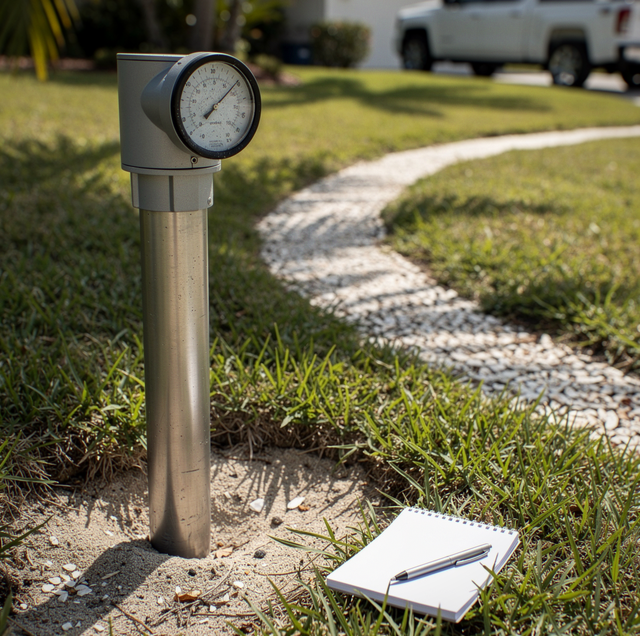
Heat presses down on the yard by nine in the morning, and the well pump hums low and steady somewhere under the grass past the spigot. A truck door shuts at the curb, boots crunch over crushed shell, and a technician kneels at the pressure gauge bolted to the wellhead pipe. He taps the glass once, watches the needle settle, and writes the number down before touching anything else.
That single reading comes first, and everything else on the visit follows from it. An annual well inspection runs on a handful of checks like this one, done in a set order, so what happens during your visit gives you a clear record of what your system actually got out of the trip.
Why the Visit Follows a Set Order
A technician does not wander from part to part. Pressure is read first, while the tank is at rest, and the numbers reflect how the system normally runs. Pump efficiency comes next, because that check involves drawing water and cycling the pump, which would muddy an untouched pressure reading if it ran first. Water clarity comes last, once the plumbing has already moved water a few times and any settled sediment has had a chance to show up in the line, the way it would in a glass left standing overnight.
That sequence is not a formality. Each check builds on the one before it, and skipping the order would mean chasing a symptom without knowing whether it started at the tank, the pump, or the water itself. Working through pressure, then pump performance, then clarity gives a technician one coherent picture built from three separate checks, run in the same order that keeps each reading honest.
How the Pressure Check Comes First
Most residential systems cycle between a low and a high point, commonly 40 psi and 60 psi, and a technician reads that swing off the gauge before anything else happens. A steady reading that falls within the expected range confirms that the tank and switch are doing their job. A reading that drifts low at rest, or one that never quite reaches the cut-out point, points toward a tank losing its air charge well before you would notice weaker flow at a kitchen tap or a garden hose.
The technician also listens while the pressure settles, since a pump that short-cycles on and off in quick bursts shows up here before it shows up anywhere else. That sound, more than the number on the dial, often tells a technician where to look next. Comparing this year's reading against last year's logged number turns one gauge check into a small trend line, not just a single snapshot.
A pressure reading that swings more than 10 psi from last year's logged number, or a tank holding under 40 psi at rest, is worth a technician's look at the tank's air charge before the next visit.
What the Pump Efficiency Check Involves
Pump efficiency gets measured by timing, not by guesswork. A technician opens an outdoor spigot to a fixed flow, times how long the pump runs to satisfy the draw and refill the tank, and reads the gallons delivered at the spigot over that same interval rather than estimating from memory. That runtime and that flow number are the two figures that describe how hard the pump is working to do its job today.
Those numbers only mean something set against a prior visit, which is why the technician pulls last year's readings before comparing anything. A pump that once refilled the tank in 90 seconds and now takes 2 minutes for the same draw is turning more motor hours into the same gallon count, and that gap shows up as a runtime increase before you would notice slower pressure at a faucet. A flow reading that has dropped against last year's number, even with the pressure gauge fine, tells the same story from the water side, not the switch side, and the two figures together are more reliable than either taken alone.
A small year-over-year change is normal and rarely calls for action on its own. A runtime that has climbed by a third, or a flow rate that has fallen by a similar margin, is the kind of shift a technician flags for closer inspection, not one to log and move past.
Reading Water Clarity on Site
Water clarity gets checked visually, right at the spigot, using the water that just ran during the pump efficiency test. A technician holds a glass sample up to daylight and looks for cloudiness, sediment, or color that would not appear under a kitchen light. Because the plumbing has already moved water a few times by this point in the visit, any sediment in the line has had a chance to surface rather than remain hidden in a pipe that has not yet run.
This on-site look is not the same as a lab water test, and a technician will say so plainly. The visual check catches obvious clarity problems in the moment, while a lab test screens for coliform bacteria and nitrates that clear-looking water can still carry. Neither shows a failing well cap, so the technician checks the cap and casing seal by hand, since a loose fit lets insects and rodents in.
What Dulls a Well System Between Visits?
Sediment and mineral scale build up gradually from hard water the well draws, coating pump components and tank fittings a little more with every cycle between one visit and the next. That buildup gives no warning on its own. Clarity stays fine for months, pressure holds steady, and then a technician's gauge and flow readings pick up the slow drift a homeowner never felt at the tap.
Aging electrical components and ordinary pump wear add to the same curve. A pump does not fail all at once; it loses a percentage of its output year over year, and a technician's job on an annual visit is to catch that decline on paper instead of waiting for it to show up as a dry morning or a sputtering faucet. Reading the same three numbers on the same schedule is what turns a gradual slide into something visible early enough to act on.
What Happens After the Gauges Go Quiet
Once the readings are in hand, the technician records what changed and what held steady, comparing this visit's pressure, runtime, and clarity notes with last year's file. Most visits end with a short rundown: the tank is holding its charge, the pump is running within a normal range, the water is clear. When a number has moved, that gets flagged too, along with what it means and how soon it is worth another look.
The smallest thing that prevents a bigger problem is rarely a repair at all. It is a logged number from this visit sitting next to a logged number from last year, close enough together that a technician can see a drift starting before you would ever notice a difference at a faucet.
Frequently Asked Questions
Most wells benefit from an annual inspection that checks pressure, pump efficiency, and water clarity in a single visit. A yearly schedule gives you two readings to compare, which is how you catch a slow decline before it reaches your tap.
Low water pressure, sputtering faucets, cloudy water, unusual pump noises, or a jump in your electric bill are signs worth a call soon. None of them is an emergency alone, but together they mean your system is working harder than it should, and addressing them keeps a small issue from becoming a repair you could not plan for.
A visit takes a few hours, from the first pressure reading to the final water clarity check, though the exact time depends on how accessible your wellhead is that day. An easy-access well moves faster than one where thick landscaping slows your technician down.
Clear water at your tap does not mean every part behind it is holding up the same way. Pressure and pump efficiency can drift for months before you notice a change at your faucet, which is the gap an annual visit is built to catch before it ever reaches you.
A visual clarity check happens at every visit, and a lab water test is often recommended alongside it to screen for minerals and bacteria that clear water can carry. Together, the two give you more than either one alone, since water that looks clean to your eye can still fail a lab panel.
Sediment and mineral buildup from hard groundwater coat pump parts and tank fittings a little more with each cycle, and aging electrical components add ordinary wear on top of that. It still carries no warning at your faucet, so a system can feel completely normal to you for months while its numbers slide. A technician catches that decline by comparing this year's readings against last year's file, since a drift invisible day-to-day becomes obvious once you set the two visits side by side.
Schedule an annual well inspection before the summer irrigation season pushes the system harder — a technician checks pressure, pump efficiency, and water clarity in one visit and flags minor wear before it worsens. Fussell Well Drilling serves Polk County and Central Florida. Call (863) 984-3144.
